GrowTraffic Ltd
For thirty-odd years, we have built websites, funnels, navigation systems and content with one clear goal in mind. Get people to arrive. Get them to look around. Guide them gently to where we want them to go. It has shaped the way we think about marketing, design, search and user experience. Yet quietly, almost without anyone realising, that world is beginning to disappear.
Artificial intelligence is not simply another layer added on top of the web. It is starting to replace the experience of the web itself. Instead of searching, clicking, comparing and browsing, people will increasingly ask AI to handle things for them. In response, the AI will create the interface, not the website. It will generate, on demand, a personalised view designed specifically for that individual at that precise moment, using information drawn from across the entire internet.
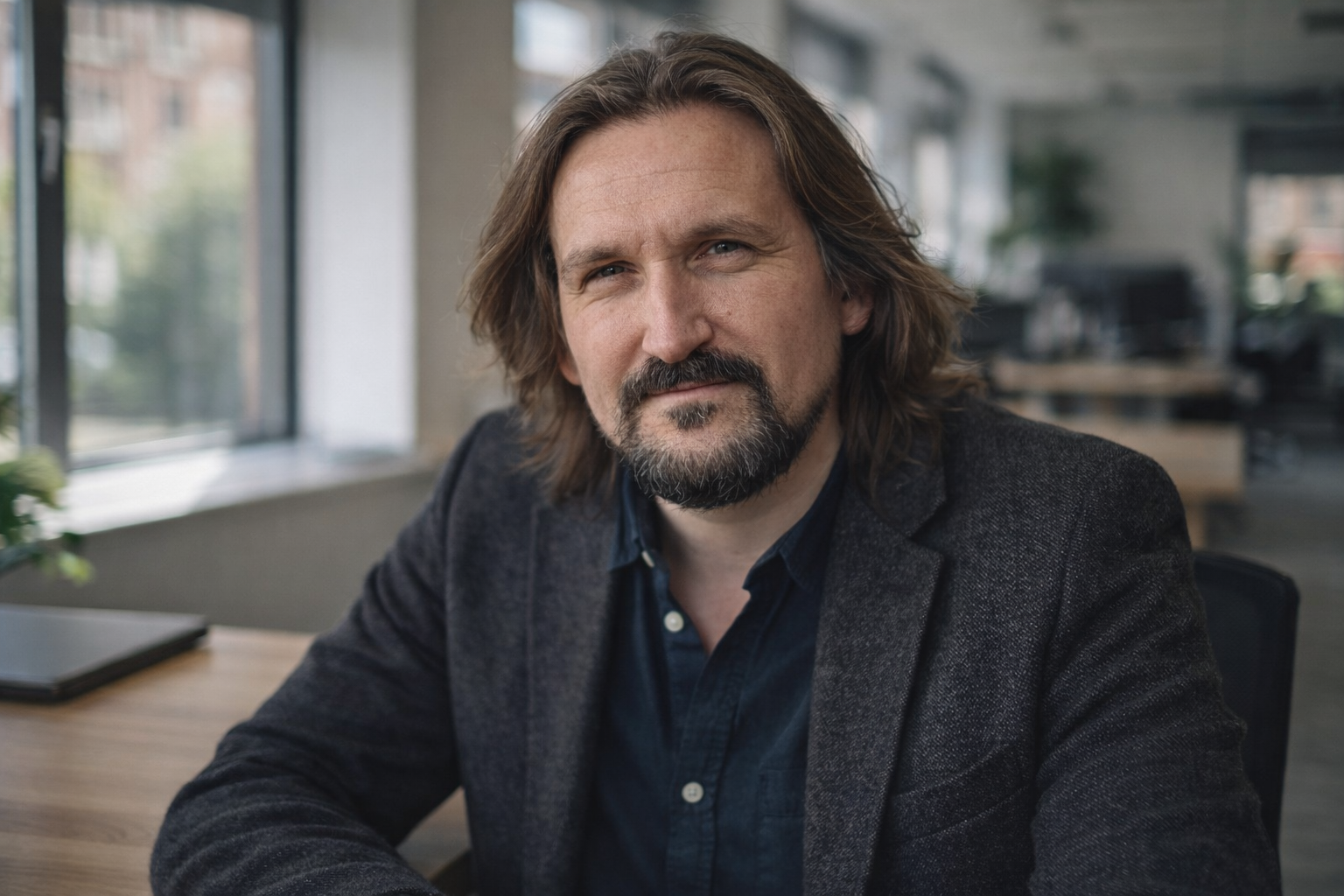
In many cases, it will be clearer than most websites. It will be faster than most websites. It will remove clutter, unnecessary friction and marketing fluff. And it will be brutally selective about what is worth showing. Heading up one of the world’s leading search marketing agencies, Simon Dalley of GrowTraffic says this is the point many businesses are not yet grasping.
“We have spent years assuming the website is the destination,” says Dalley. “But AI will build the destination itself. It will design the page, choose the options, compare the providers, and remove anything that does not help the user. A lot of businesses simply will not make the cut.”
The internet will continue to exist, but the role of the traditional website will be radically different. AI will sit between the user and the web, extracting information, restructuring it, and presenting it in a simplified environment that feels obvious and natural. It will favour clarity over decoration, truth over hype, and trust over polish. In many cases, users will never see original websites at all.
“AI does not wander around the internet as we do,” Dalley explains. “It goes directly to the answer. If your business is not structured in a way that makes sense to AI, if your information cannot be clearly read, verified and trusted, you are not slipping down the rankings. You are being removed from the journey entirely.”
This shift creates a fundamental challenge for marketers. For decades, the central question has been how to drive people to our websites. The question now becomes whether AI can understand us, trust us, and use us. That requires businesses to structure their information more transparently, present their products and services more honestly, and become reliable data sources instead of glossy brochures. Hidden pricing, confusing navigation, unnecessary content blockers and endless persuasion techniques are likely to work against businesses in an AI-mediated world.
“Most websites are designed around control,” Dalley says. “AI is designed around usefulness. If your site is full of noise, AI will simply lift the useful bits and discard the rest. We have to think differently. We have to build for people and machines at the same time.”
Dalley also believes this transformation will extend far beyond screens. AI is increasingly being combined with robotics, including humanoid systems that are moving into logistics, healthcare, manufacturing and service industries. Decision-making will not stay digital. It will become embedded in physical environments.
“Once AI is selecting suppliers, ordering materials, managing schedules and interacting with customers through robotic platforms, the idea of someone patiently browsing through dozens of websites feels outdated,” he says. “Eligibility becomes the main question. Are you a business AI can trust to be involved in that process?”
“For those who think I’m talking about the future, I’m talking about a Tesla car. It's an AI-powered robot. There is very little difference between the technology required for a self-driving car and a humanoid robot. It’s the same sensors, the same actuators and much of it is the same software and the same learning.”
In this world, marketing shifts from trying to grab attention to earning a place within AI’s decision framework. That requires transparency, consistency, genuine social proof, clear pricing and demonstrable reliability. It also requires businesses to stop imagining AI as a tool they will eventually add when convenient.
“Some people believe they will simply bolt AI onto their business when they are ready,” Dalley says. “But if you are invisible to AI by the time everyone else is using it, the gap will already be enormous.”
Dalley gave the following analogy of how he sees the internet working in the future: "Picture this: you’re looking for a specialist product. Only three companies in the world make it. None of them sell online. If you want it, you have to speak to a sales rep and pick through PDFs on their websites.
"Now add a twist. You work in marine engineering, and nobody has ever thought about using this product in your industry before. You’re also colour blind. And Norwegian...
"In the future, an AI like ChatGPT won’t send you off to search, click and compare. It will spin up a custom interface just for you. The page appears in Norwegian. The colours are adjusted so you can actually see them properly. It compares all three suppliers and their products. It explains how the product would perform specifically in a North Sea marine environment, based on everything it knows about the materials used in the product, conditions at the bottom of the sea and previous use-cases.
"Then it guides you to the best option. Maybe it even places the order. It writes the spec. It sends it to the supplier. An AI agent negotiates terms. It pays.
The important bit is this: it already knows your industry. It understands your context. It adapts to your language and accessibility needs. And you never had to browse multiple websites or explain any of it.
"That’s the shift."
Despite the urgency, Dalley describes himself as a techno-optimist. He believes AI has the potential to level the playing field and give smaller businesses advantages they never previously had.
“AI will almost certainly break the version of the internet we built,” he says. “But it also gives us the chance to rebuild it in a way that serves people better. It can be cleaner, faster, more efficient, and in many ways more human in outcome, even if machines shape the journey. The future will belong to the businesses that understand this early and choose to adapt with it rather than pretending nothing is changing.”
He cheerfully adds, “The future is starting to look futuristic, but too many business owners haven’t taken the time to look up and see what's coming.”
**** About *****
GrowTraffic is one of the leading search marketing agencies in the UK, helping businesses build sustainable growth through SEO, content strategy and ethical digital marketing. Working throughout the world with organisations across a wide range of sectors, the company focuses on long-term visibility, audience trust, and practical results that endure algorithm shifts and technological change.
Simon Dalley is the founder and director of GrowTraffic, with around 25 years of experience in digital marketing. He is one of the leading SEO Consultants in the UK and has built a broad and varied business portfolio, which includes agencies, property, e-commerce, technology, publishing, and F&B retail.
Contact: SIMON DALLEY
Company Name: GrowTraffic Ltd
Email: sd@growtraffic.co.uk
Phone Number: +447411420740