AI gets physical: an operator’s view from the cleaning front line
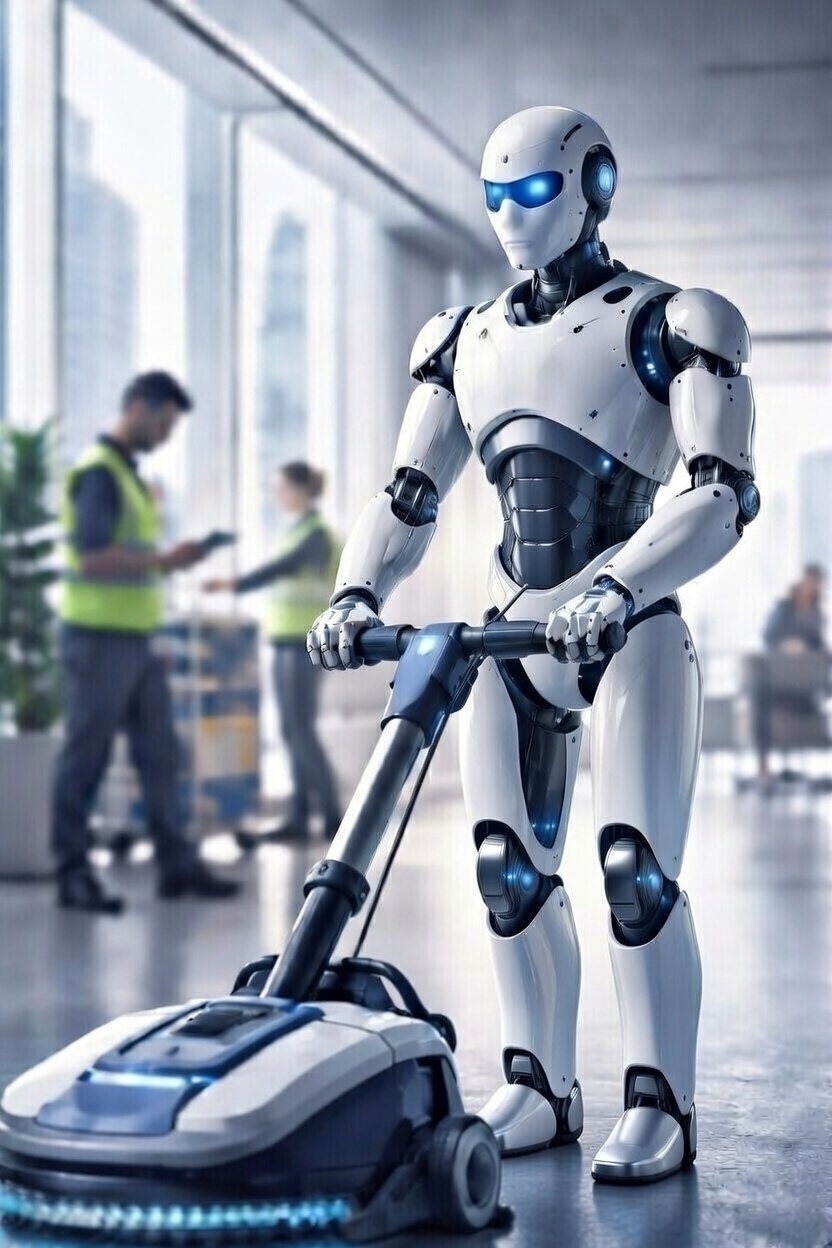
AI gets physical: an operator’s view from the cleaning front line
Barclays Research has put a clear marker down with its recent “AI gets physical” work: humanoid robotics is moving from concept to commercial reality, helped by a sharp reduction in production costs and a set of structural labour tailwinds.
From the outside, this looks like a tech story. On the inside, in real buildings with real occupants, it is an operating model story.
If you run property or FM portfolios, the question is not “Which robot should we buy?” but “Which automated solution is sympathetic to the given facility, lifts standards, resilience, and reporting without increasing costs?”.
The opportunity is real, but the value is in the last mile
Barclays points to a 30-fold fall in production costs of robots over the past decade, driven by advances in what they call brains, brawn, and batteries.
In plain English: capability is rising and unit economics are improving.
Cleaning is one of the most obvious and early target sectors because it’s highly repetitive, labour intensive, quality sensitive, and increasingly scrutinised by end-users of a premises.
We’re already seeing scaled deployments of autonomous cleaning equipment in high footfall environments. Mitie, for example, announced a fleet of autonomous cleaning cobots at Heathrow, positioned explicitly as machines that support teams and free people to focus on specialist tasks.
So, yes, this is happening.
But the reason robotics in cleaning often under-delivers is also simple: most organisations try to bolt tech onto a traditional, unchanged service model.
What changes when AI gets physical, from an operator lens
In cleaning, “physical AI” changes the shape of work more than it changes the purpose of the work.
You still need consistent standards, safe delivery, fast response, and evidence you can share with clients and occupiers. What changes is how you achieve it.
1) The unit of value becomes coverage and consistency, not hours
In a traditional model, you buy people hours and hope standards follow. In a hybrid model, you design for outcomes: coverage, frequency, quality scores, and response times.
That forces a more disciplined approach to scope and measurement. It is not glamorous, but it is where the value sits.
2) Workflow redesign beats gadget buying
Robots perform best when you redesign the route, the sequence, and transfer some responsibility from people to tech. Otherwise, you get theatre: a robot cleaning the wrong area beautifully while complaints rise elsewhere.
Operator takeaway: treat the first deployment like a process improvement project, not a procurement exercise.
3) Safety and trust become the gating factors
In occupied buildings, safety is not a box tick. It is the difference between scaling and stopping.
You need clear answers to: where machines operate and when, how edge cases are handled, who is accountable on site every shift, and what the escalation path is when something fails.
If you cannot explain that clearly, you are not ready to scale.
4) Uptime is the real KPI, not capability
Every demo assumes ideal conditions. Real sites are messy: thresholds, lifts, changing people flows, last minute events, and constant operational variance.
The winners will be operators who can keep uptime high with on site support, maintenance and spares discipline, and clear ownership of exceptions. Most value is created by reducing downtime and rework, not by chasing the most advanced machine.
5) The workforce story must be credible
Barclays frames humanoids as augmenting rather than replacing workers, especially as labour shortages intensify. That is directionally right, but it only lands if change is handled properly.
Operators need to be explicit about what tasks are being removed, what higher value work people move to, and how training, supervision, and progression will work.
Real world use cases that work now in cleaning
To be practical, most near term wins are not humanoids. They are focused automation that improves consistency and frees teams for the detail work that occupants notice.
Examples that scale today include autonomous floor cleaning in large predictable areas and demand led cleaning approaches supported by data signals, alongside digital QA and reporting that makes standards visible and reduces disputes about scope.
Humanoids may matter later. Hybrid delivery is already here.
The competitive edge is not having robots, it is being robot ready
Competitors will talk about innovation. The operators who win will show safer deployments, fewer escalations, more consistent standards, and reporting that clients and end-users can trust.
That is how you get ahead: by treating physical AI as a service redesign, not a technology purchase.
Sources: Barclays Research press summary on “AI gets physical” and outlook. Mitie announcement of autonomous cleaning cobots deployment at Heathrow as an example of scaled adoption.
enquiries@tcc-services.co.uk