Beyond ‘meet the buyer’: building procurement-ready, diversified and resilient manufacturing supply chains
Oxford Innovation Advice enables manufacturing SMEs to overcome the practical barriers that prevent contract wins - including capacity, quality, standards, finance, innovation, digital maturity and tender readiness.
Working alongside commissioners, primes, OEMs, tiered suppliers and specialist partners, the model combines preparation for immediate procurement opportunities with support to enter adjacent markets and build longer-term resilience.
For a manufacturing SME, becoming part of an OEM or major industrial supply chain can be transformative.
A significant contract can create more predictable revenue, support investment in people and equipment, strengthen the business’s market credibility and provide a route into new sectors. For OEMs, developing a capable supplier base can improve resilience, responsiveness, innovation and access to specialist expertise.
However, the opportunity is not created through introductions alone.
A manufacturer may have an excellent product, service or technical capability, but may still need support to meet a buyer’s requirements around quality, capacity, delivery, accreditations, digital systems, cyber security, sustainability, financial resilience and governance.
Similarly, OEMs and other major industrial buyers need greater visibility of potential suppliers and confidence that those businesses can meet their requirements, manage growth and deliver reliably.
This creates a gap between supply-chain opportunity and supplier readiness - a gap that directories, networking events and standalone ‘meet the buyer’ sessions rarely close on their own.
Oxford Innovation Advice has the manufacturing experience, specialist advisers and programme infrastructure to bridge that gap.
From vertical opportunity to horizontal resilience
Most supply-chain initiatives are necessarily vertical: they help suppliers respond to the needs of a particular prime, OEM, major buyer or industrial project. This can generate valuable commercial opportunities, but it can also leave SMEs and regional economies exposed if procurement priorities change, demand contracts or a major customer leaves the market.
Oxford Innovation Advice’s model adds a horizontal dimension.
Alongside preparing an SME for a defined procurement opportunity, advisers help the business understand where its capabilities, standards, products and delivery experience could transfer into adjacent sectors. A supplier developing experience through a critical-minerals project, for example, may also have relevant capabilities for marine, geothermal, offshore wind or other high-value markets.
This approach is informed by Ansoff market-development and diversification principles. Where an existing capability is taken into a new sector, the opportunity is principally one of market development. Where the product or service also needs to change, innovation and diversification support may be required.
Oxford Innovation Advice’s role is not to place itself at the centre of every buyer relationship. It acts as an enabling delivery partner: working alongside commissioners, primes, OEMs, Tier 1 and Tier 2 suppliers, sector bodies and technical partners to translate demand into practical requirements, assess SME readiness and coordinate the support needed to close the gap.
Applying the supply-chain model in Cornwall
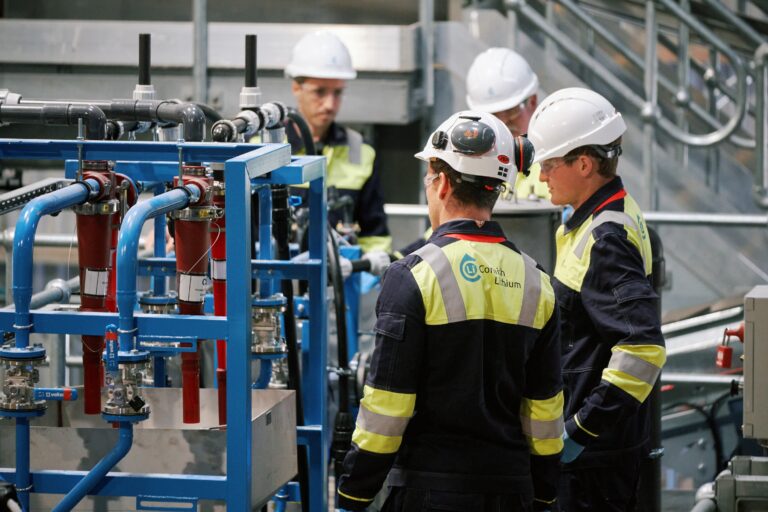
Through the Access to Finance Plus programme, Oxford Innovation Advice worked alongside Cornish Lithium to explore how regional businesses could prepare for future requirements associated with the Trelavour Lithium Project in St Dennis.
The work went beyond identifying potential suppliers. Advisers considered whether SMEs had the capacity, systems, quality processes, finance and management capability required to respond to larger commercial opportunities.
Businesses were also encouraged to examine how the capabilities developed through one opportunity could help them compete in adjacent markets including marine, geothermal and offshore wind.
This illustrates the two connected elements of the model: helping businesses become procurement-ready for an identifiable opportunity while strengthening their ability to build a broader and more resilient customer base.
The collaboration demonstrates an important principle: a major project can generate much greater regional value when procurement opportunity is combined with structured SME development.
It also provides a model that can be adapted for OEMs, anchor manufacturers and major infrastructure projects in other regions.
Five capabilities that turn opportunity into procurement readiness
Manufacturing: Capacity, productivity, production planning, quality control, process improvement, standards, accreditations and reliable delivery.
Access to Finance: Cash-flow forecasting, working capital, equipment finance, grant and investment readiness, and planning for the financial pressures created by larger contracts.
Innovation: Product and process adaptation, collaborative technical development, R&D opportunities and responding to innovation challenges raised by primes or tiered suppliers.
Growth: Strategy, leadership, workforce planning, commercial development, pricing, market intelligence and diversification into adjacent sectors.
Digital: Automation, data integration, production systems, traceability, cyber security and the digital capabilities required by increasingly sophisticated customers.
The value comes from combining these capabilities. A business may require equipment to increase capacity, finance to acquire it, digital systems to manage production, quality standards to satisfy the buyer and a growth plan that ensures the investment remains commercially sustainable – not as a standalone or fragmented offer.
Proven delivery across the supplier-readiness journey
The Cornish Lithium initiative is underpinned by Oxford Innovation Advice’s wider experience of designing and delivering specialist SME support programmes.
Oxford Innovation Advice has nearly four decades of experience in business support and has worked with more than 37,000 SMEs across the UK. Its expertise covers manufacturing, growth, innovation and access to finance - capabilities that are particularly important when helping smaller businesses prepare for larger and more complex commercial opportunities.
The Manufacturing Growth Programme, designed and delivered by Oxford Innovation Advice, helped manufacturing SMEs create and safeguard more than 12,400 jobs between 2016 and 2023. Its delivery model combined experienced Manufacturing Growth Managers, structured business reviews, tailored action plans, specialist consultancy and support to implement improvement projects.
Oxford Innovation Advice has also developed significant experience through Made Smarter. Delivering across various regions of the UK, the regional teams have supported more than 600 manufacturers to explore and adopt technologies including automation, robotics, data integration and the Industrial Internet of Things, helping businesses connect digital investment to long-term productivity and growth objectives.
Insights from Oxford Innovation Advice’s supply-chain work in Staffordshire, Lincolnshire and Worcestershire have also informed the model, reinforcing the importance of combining demand intelligence with supplier-readiness support and helping SMEs identify more than one sustainable route to market.
This manufacturing and digital experience is reinforced by Oxford Innovation Advice’s delivery of access-to-finance, innovation and growth programmes. Together, these capabilities allow advisers to address not only whether an SME can make a product or provide a service, but whether it has the financial resilience, leadership, systems, standards and commercial capability to deliver reliably for a larger customer.
From individual contract wins to regional resilience
For SMEs, success means more than attending a buyer event. It means having the capacity, standards, finance, systems and commercial confidence to win a contract, mobilise it successfully and use the resulting track record to enter further markets.
For primes, OEMs and tiered suppliers, the model creates a stronger and more credible pipeline of potential suppliers. For commissioners, it supports more resilient regional economies by helping local businesses build capabilities that are relevant to several customers and sectors rather than becoming dependent on one major buyer.
Oxford Innovation Advice brings together specialist advisers, proven manufacturing delivery, access-to-finance expertise, innovation support, growth planning and digital capability. Working alongside market and technical partners, it can turn procurement opportunity into sustainable business growth with longer-term regional value.
To discuss how a supplier-readiness and diversification programme could support your regional manufacturing base, contact David Ledbury at David.ledbury@oxin.co.uk
For more information on Oxford Innovation Advice, visit:
www.oxfordinnovationadvice.co.uk
This press release was distributed by ResponseSource Press Release Wire on behalf of Oxford Innovation services Ltd (Oxford innovation advice) in the following categories: Business & Finance, Public Sector, Third Sector & Legal, Manufacturing, Engineering & Energy, for more information visit https://pressreleasewire.responsesource.com/about.